Why brands still need taste, intuition, and creative direction.

Artificial intelligence is no longer a future concept. It is embedded in our daily lives. From simple tasks like creating grocery lists or drafting emails to complex workflows such as business strategy, campaign planning, and execution, AI is everywhere.
Its rapid adoption has created confusion across social media, with one recurring question dominating conversations: “Is this AI?” That uncertainty has sparked fear, especially around job security. Some believe AI will replace entire roles, while others argue the technology is too inaccurate to ever pose a real threat.
Nowhere is this tension felt more strongly than in the creative marketing industry.
Why Creatives Are Nervous
Brands have already begun developing campaigns heavily reliant on AI. Prompts are being used to generate strategy, visuals, photography, video, and even copy, sometimes with minimal human involvement.
The appeal is obvious. AI is faster and cheaper.
But the results often feel artificial. The visuals can lack soul, the messaging can feel hollow, and the storytelling rarely lands with emotional depth. This raises a bigger question. Will this “fakeness” eventually become the norm? Will audiences grow so accustomed to AI-generated content that authenticity no longer matters?
There is also a practical challenge many creatives have already encountered. AI tools are inconsistent. The more prompts entered, the more diluted the output can become. If the right result does not appear early, the process quickly turns frustrating, making it unrealistic for brands to rely solely on AI for high-stakes creative work.
Yet despite skepticism from much of the creative world, one truth remains unavoidable. AI is here to stay.
So the real question is not whether AI is a threat, but who it is a threat to.
AI Isn’t a Threat to Creative Jobs. It Is a Threat to Resistance.
AI does not eliminate creativity. It exposes it.
Technology has always evolved, and creative industries have always adapted. When used correctly, AI becomes a tool that enhances creative work rather than replacing it. It acts as a multiplier, not a substitute.
AI will never fully replace the creative industry, but it will change how creative work is executed. The creatives who thrive will be those who understand how to integrate AI into their process without losing their human edge.
What AI Can’t Replace
1. Human Insight and Cultural Nuance
Creative marketing is rooted in understanding people. While AI can generate captions, mockups, and surface-level ideas, it cannot truly understand culture, emotion, or nuance. It cannot feel shifts in taste, recognize when something feels off, or understand why certain moments resonate more deeply than others.
Taste, instinct, and lived experience are inherently human, and they remain irreplaceable.
2. Talent Over Tasks
AI excels at executional tasks such as formatting, drafting, basic editing, resizing assets, and creating repetitive variations. What it cannot do is interpret a brand’s vision, lead creative direction, or tell emotionally compelling stories.
Marketing is not about output alone. It is about creating a feeling, an emotional connection that lives in the mind of the consumer long after they scroll past the content.
3. Creative Direction Still Requires Humans
Brands are not hiring AI tools. They are hiring people with perspective. Strategists who understand consumer behavior. Art directors who can clearly articulate a brand’s vision. Creators who understand tone, trend, and nuance.
AI can generate 100 caption ideas, but it takes a human to decide whether a caption feels like Architectural Digest or SKIMS. That discernment is what separates good marketing from forgettable content.
4. Creativity Is Becoming More Valuable, Not Less
Social media has exploded the volume of content in the world. As a result, differentiation matters more than ever. Brands do not just need posts. They need storytelling, brand worlds, and cultural relevance.
Creatives are no longer just producing content. They are shaping identity. That responsibility cannot be outsourced to an algorithm.
The Real Impact of AI on Creative Marketing
In reality, AI threatens low-effort content and generic design, not thoughtful, intentional creativity.
It challenges creatives who rely on templates, trends without context, and surface-level execution. But for those with strong instincts, refined taste, and strategic thinking, AI becomes an advantage rather than a liability.
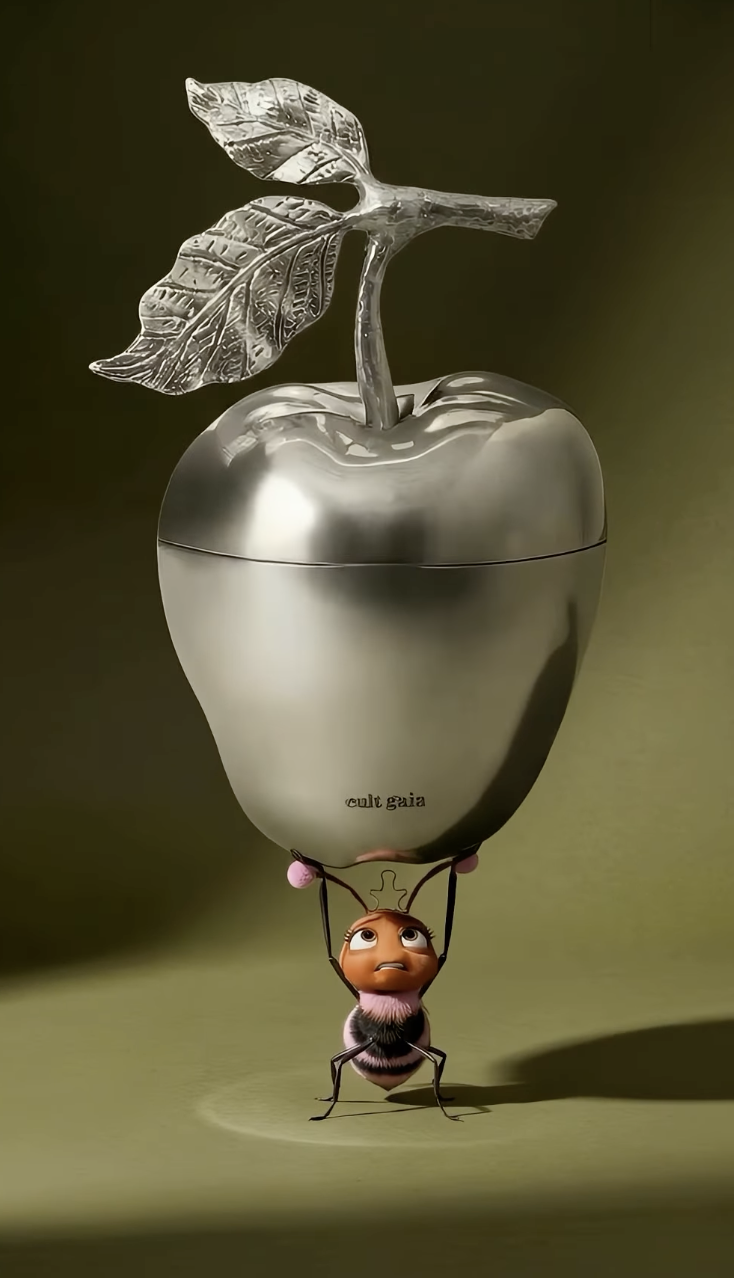
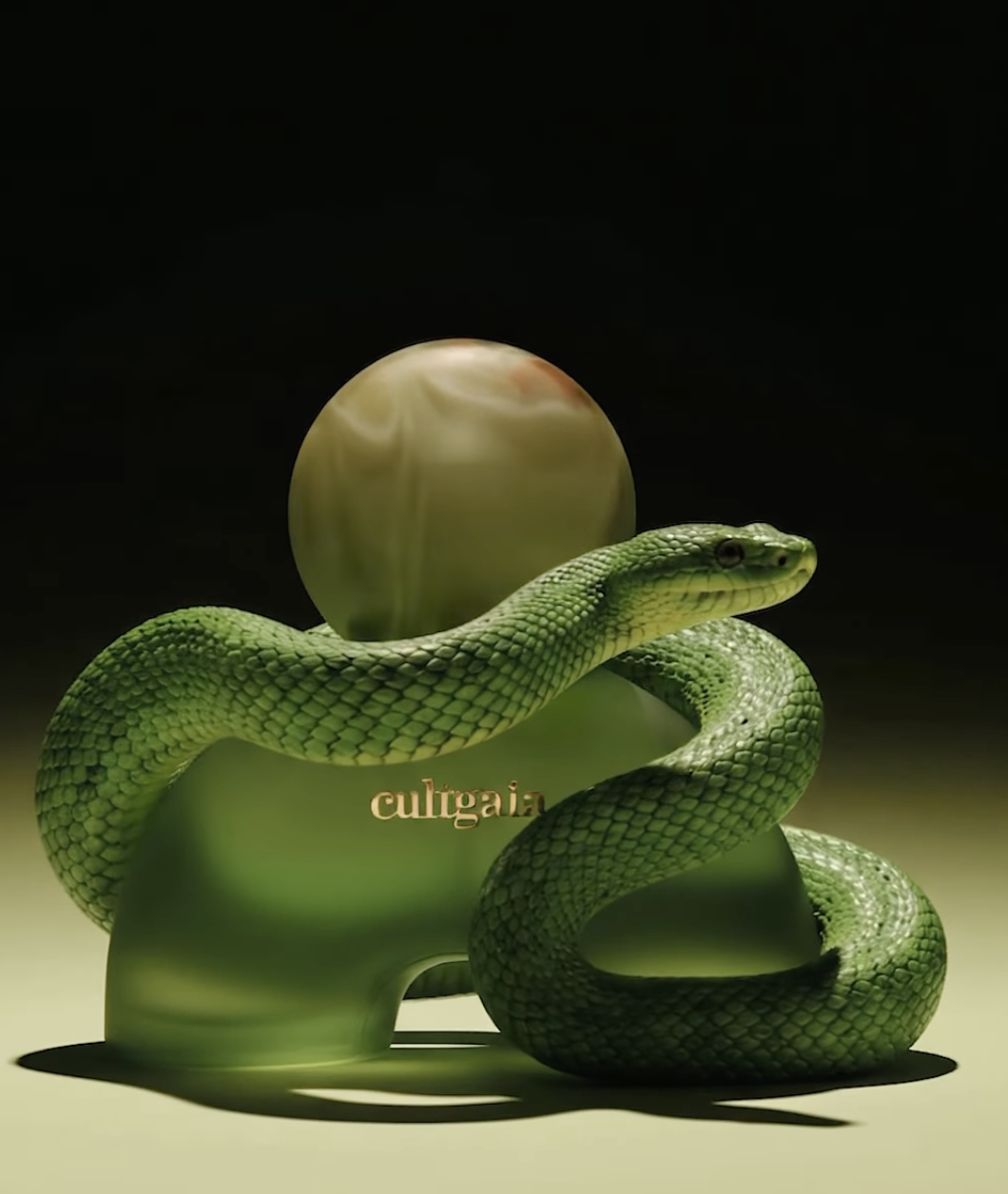
Fashion brands such as Cult Gaia demonstrate how AI can be used selectively in marketing to support creative expression without eroding brand taste or identity.

AI does not replace creativity. It reveals who actually has it.
The future of creative marketing is not human versus AI. It is human with AI.
The creatives who succeed will be those who embrace AI as a tool while protecting the one thing it can never replicate: human insight.
Creativity has always evolved. This moment is no different.